
Dividends Explained: Yield, Growth, and the Payout Trap
Why a high dividend yield can be a warning sign, and how to spot sustainable payouts.

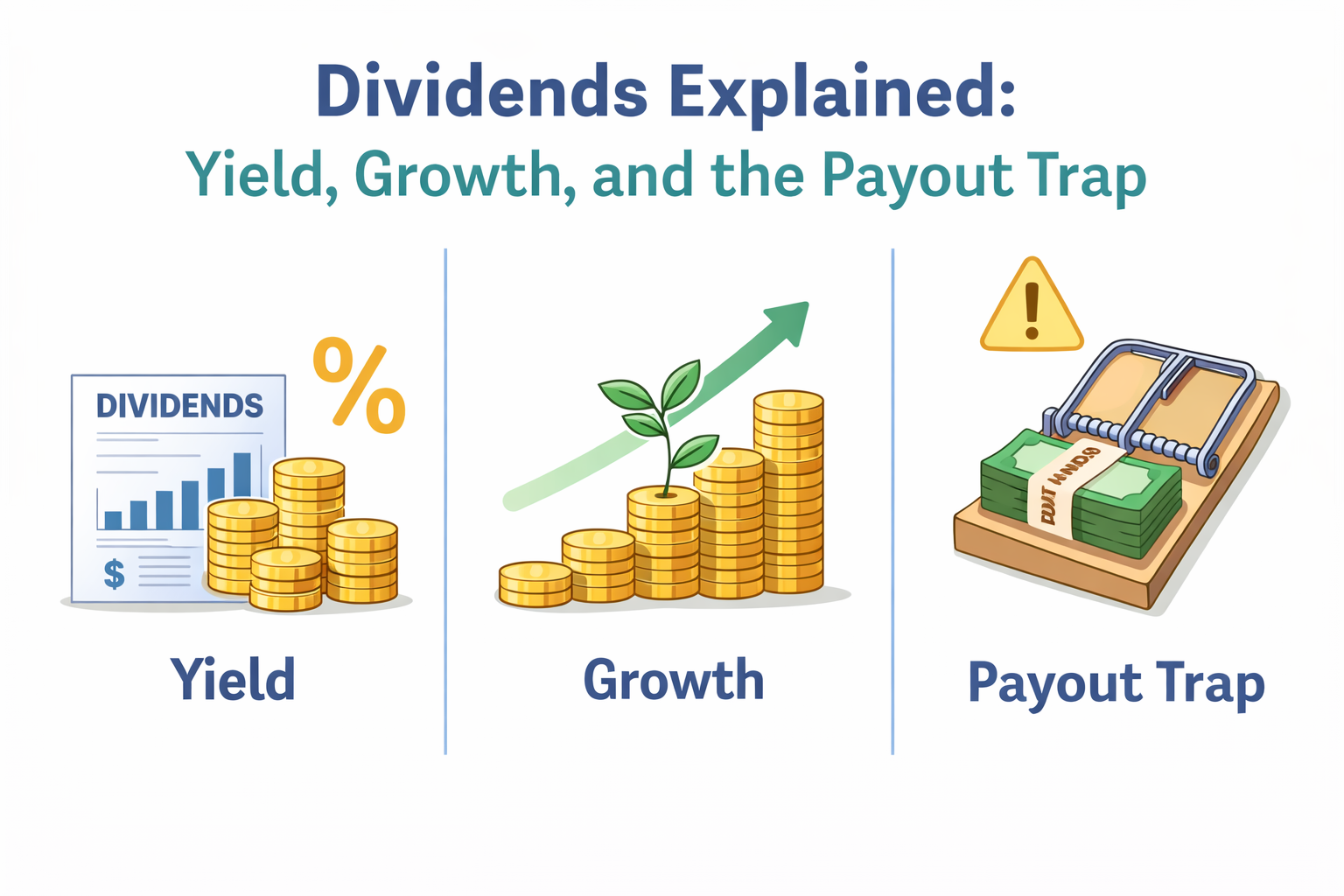
Dividends seem simple: the company pays you cash for holding the stock. But beneath the surface, dividend investing is full of traps. The highest yields are often the most dangerous.
Yield vs. growth
Dividend Yield = Annual Dividend / Stock Price
A stock paying $2/year at $100 yields 2%. If the stock drops to $50, the yield jumps to 4% — but you've lost $50 in capital. High yield can be a symptom of a falling price, not a generous company.
The payout ratio tells the truth
Payout Ratio = Dividends Paid / Net Income
Above 80% leaves little room for reinvestment. Above 100% means the company is paying dividends it isn't earning — unsustainable.
What to look for
- Payout ratio 30–60% — sustainable with room to grow
- 5+ years of consecutive increases — management commitment
- FCF covers the dividend — earnings can be manipulated, cash flow can't
- Debt/Equity below 1.0 — not leveraging up to fund payouts
Dividend aristocrats vs. yield traps
The S&P 500 Dividend Aristocrats have raised dividends for 25+ consecutive years (JNJ, PG, KO). They typically yield 2–3% but compound powerfully over decades. Contrast with a stock yielding 8% that cuts its dividend within a year — you collected 8% in income but lost 40% in capital.